

Tesla Roadster Owner Advisory
Rodents vs. Roadsters:
Small Pests, Expensive Damage
A stored Tesla Roadster can become an inviting nesting spot for rodents. The resulting damage can range from chewed insulation and seat belts to wiring faults that leave the car inoperable.
What We Are Seeing in Our Service Center
At Gruber Motor Company, roughly 5% of the Tesla Roadsters we service show some evidence of rodent activity, from early nesting to partially chewed wiring harnesses. This is an observation from our service population, not an estimate for the entire Roadster fleet.
Sometimes owners notice the damage before bringing their cars in. Other times, we discover it while diagnosing an unrelated issue. Our technicians have learned where rodents tend to nest and routinely inspect those vulnerable areas when symptoms or evidence warrant it.
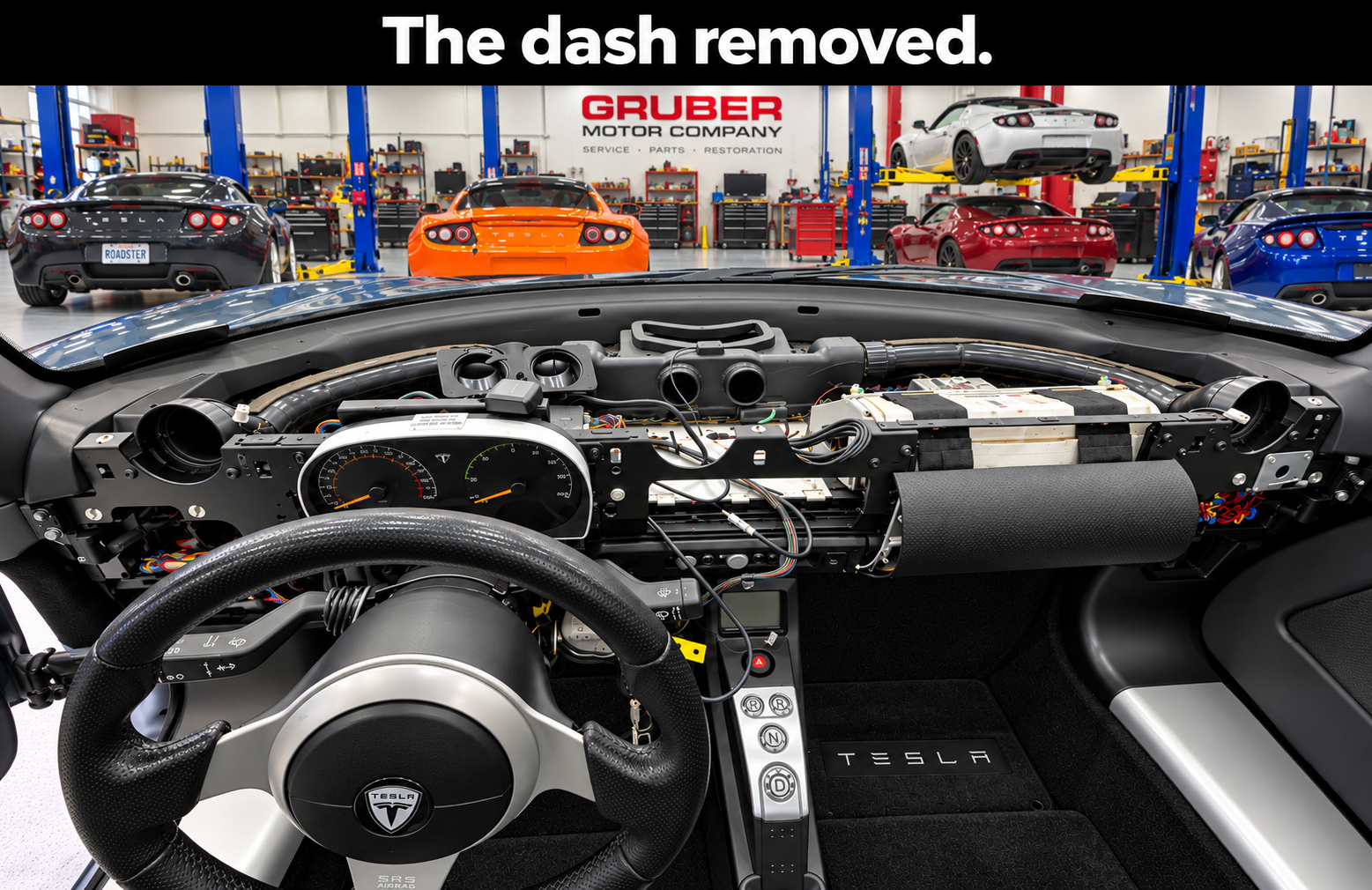
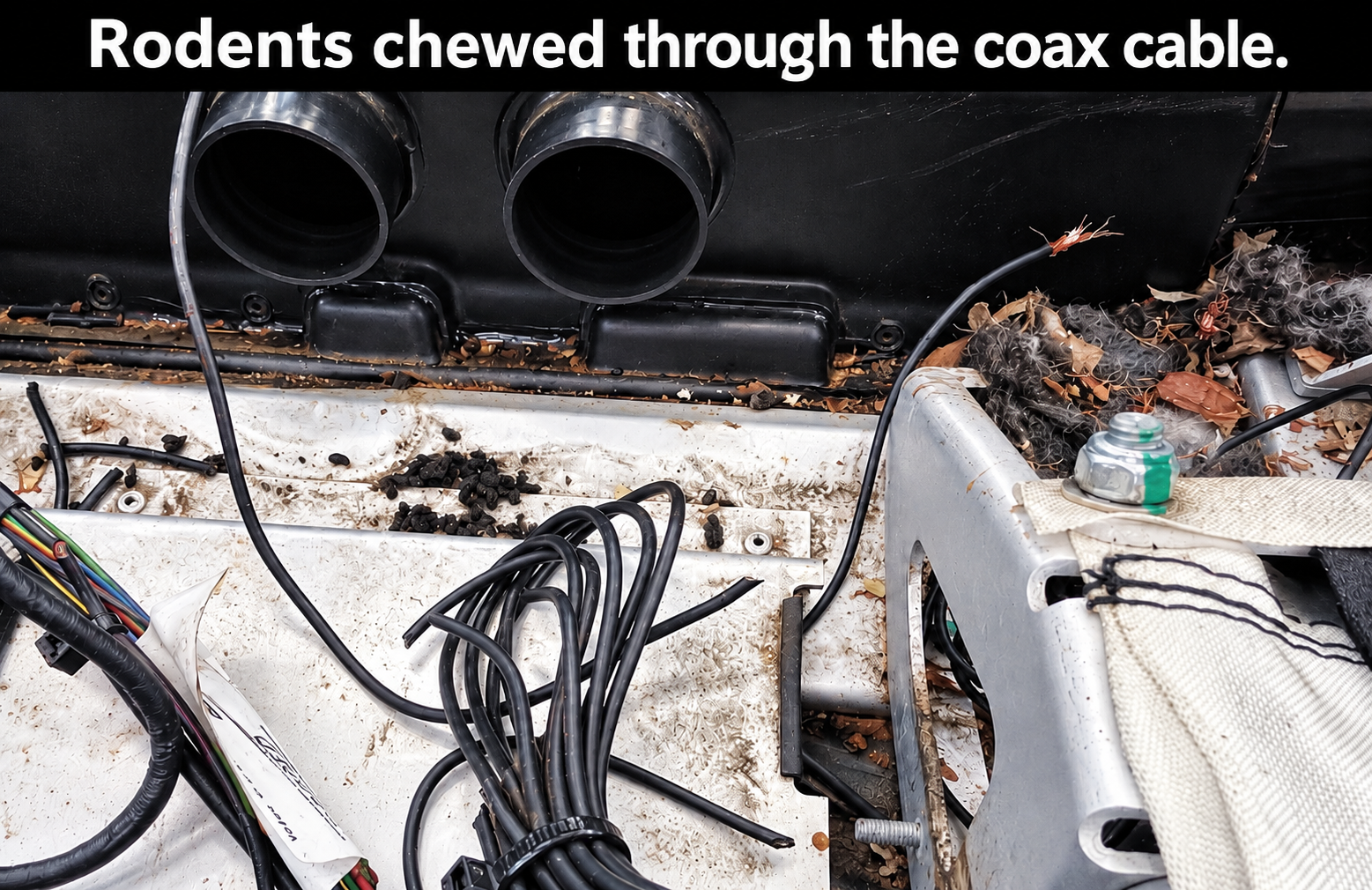
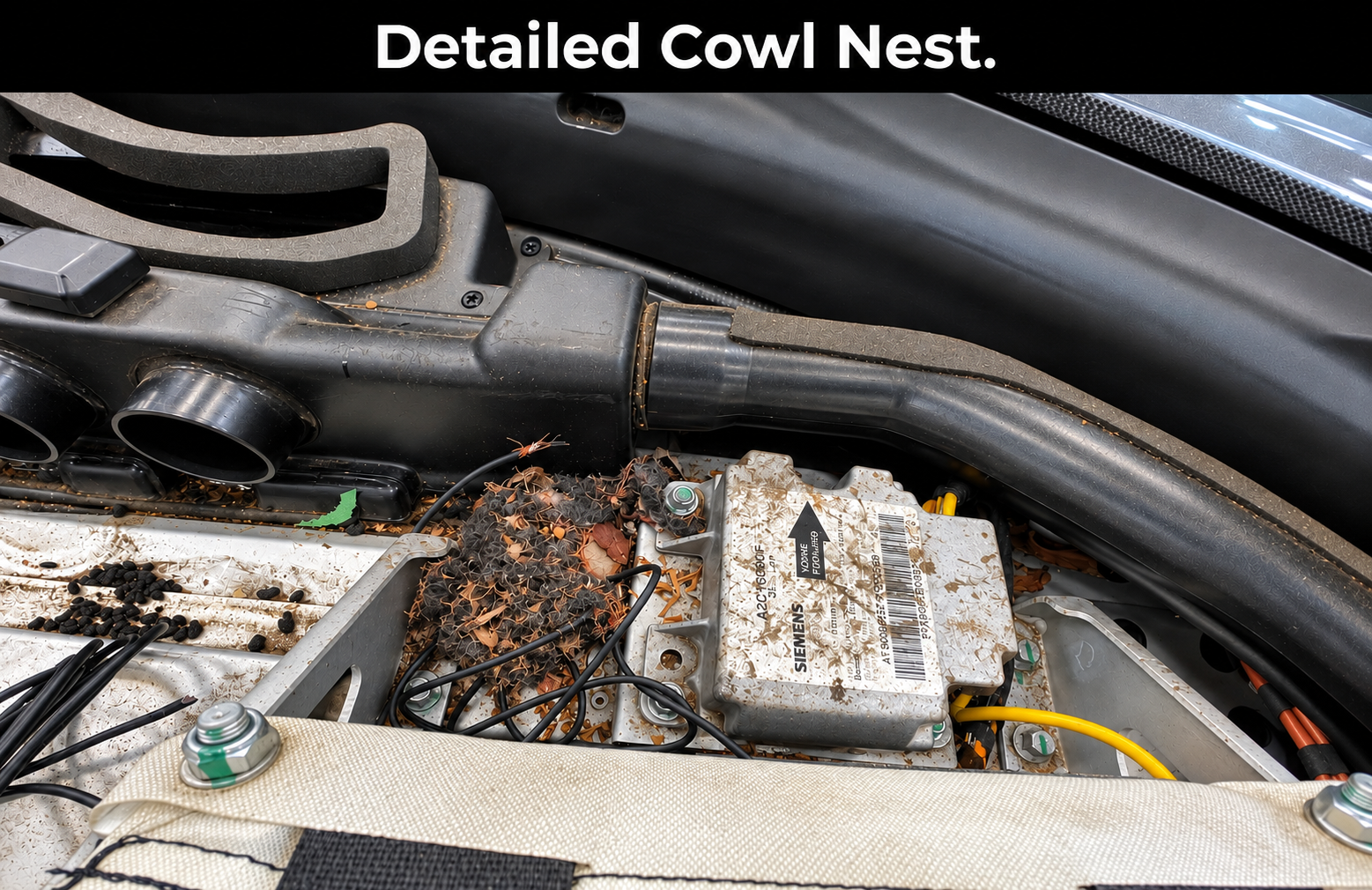
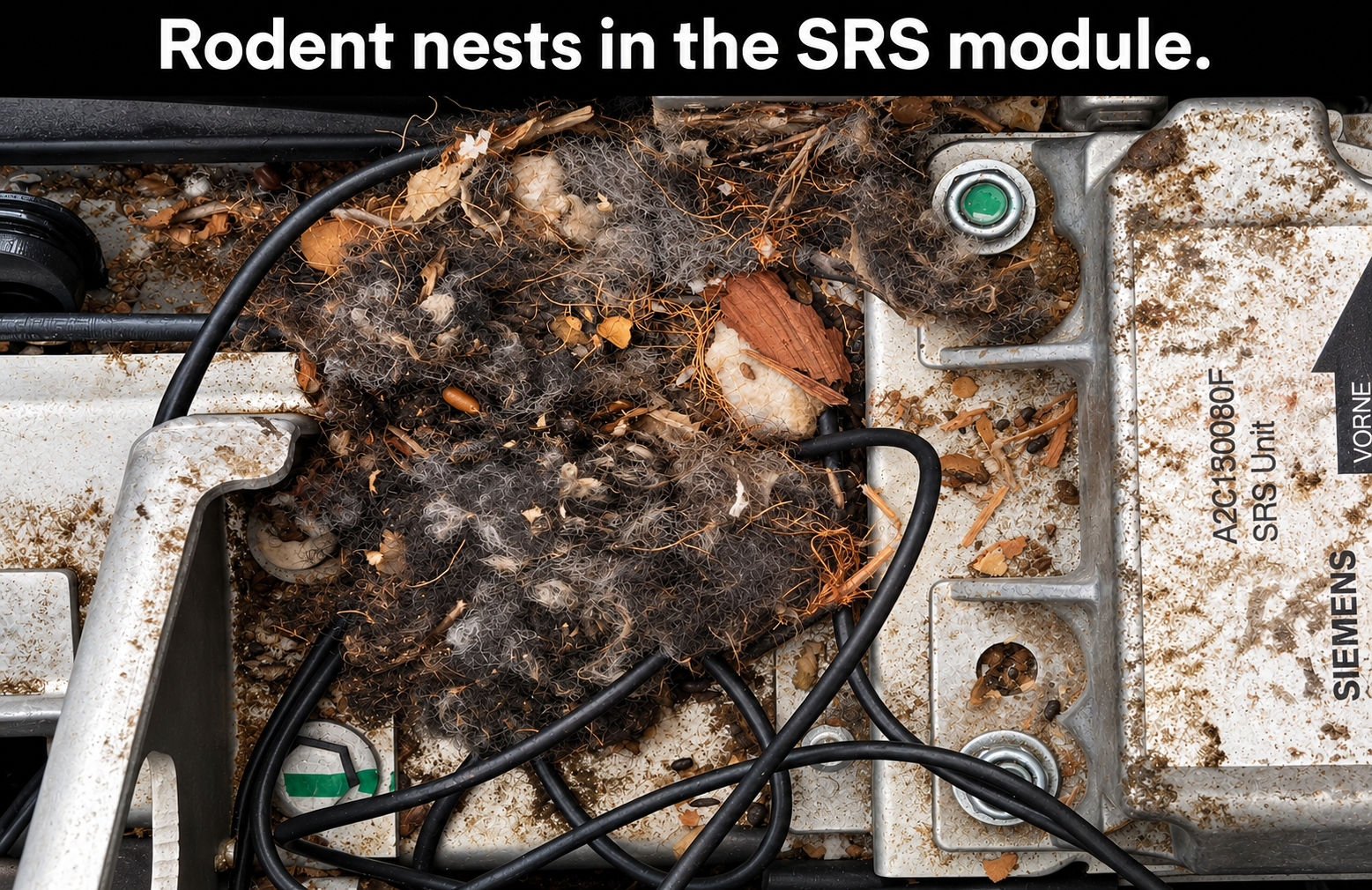
Why Stored Tesla Roadsters Are Vulnerable
A quiet, undisturbed garage gives rodents time to explore a parked vehicle. Sheltered cavities around electrical components, wiring, and coolant plumbing can provide nesting opportunities. Depending on operating conditions, residual warmth may also make some areas attractive.
Rodents can chew wiring insulation, sensor leads, harness coverings, and even seat belts for nesting material. Damage may cause intermittent electrical problems, warning messages, or a vehicle that will not operate. Wiring near high-voltage systems requires particular caution.
How to Help Prevent Rodent Damage
1. Make the Garage Less Inviting
- Remove accessible food sources, including pet food, birdseed, and open trash.
- Store food and seed in sealed, rodent-resistant containers.
- Reduce clutter and seal gaps around doors, utility penetrations, and vents.
- Trim vegetation and clear debris near the garage or storage area.
- Use appropriate traps in the garage and check them regularly. Keep traps away from children and pets.
2. Protect the Roadster During Storage
- Whenever possible, store the Roadster in a secure, enclosed garage rather than outdoors or under a carport.
- Check the vehicle regularly for droppings, nesting material, unusual odors, and visible chewing. Regular use may help reveal developing problems, but it is not a guaranteed deterrent.
- Keep windows closed, the roof properly fitted, and food or wrappers out of the cabin.
- Ask a qualified technician about protective sleeving or rodent-deterrent tape for accessible, vulnerable harness areas.
- Do not rely on peppermint or botanical scent pouches as the primary defense; evidence for their effectiveness is limited, and products must never obstruct ventilation or contact sensitive components.
What to Do If You Find Rodent Damage
If you see chewed wires, damaged seat belts, or signs of nesting near electrical equipment, avoid handling the damaged components. Do not attempt to open the battery pack, PEM, or other high-voltage enclosures. Damaged seat belts should be evaluated and replaced as needed before the vehicle is driven.
Contact us for more details
Call: 623-433-8500 Email: [email protected]